When we talk about what it means to be wealthy, most people immediately think of numbers.
A higher salary
A bigger house.
An investment portfolio that steadily climbs upward.
We imagine wealth as something measurable—something that grows the more we accumulate. If we can just reach the right number, we believe, everything will finally feel secure.
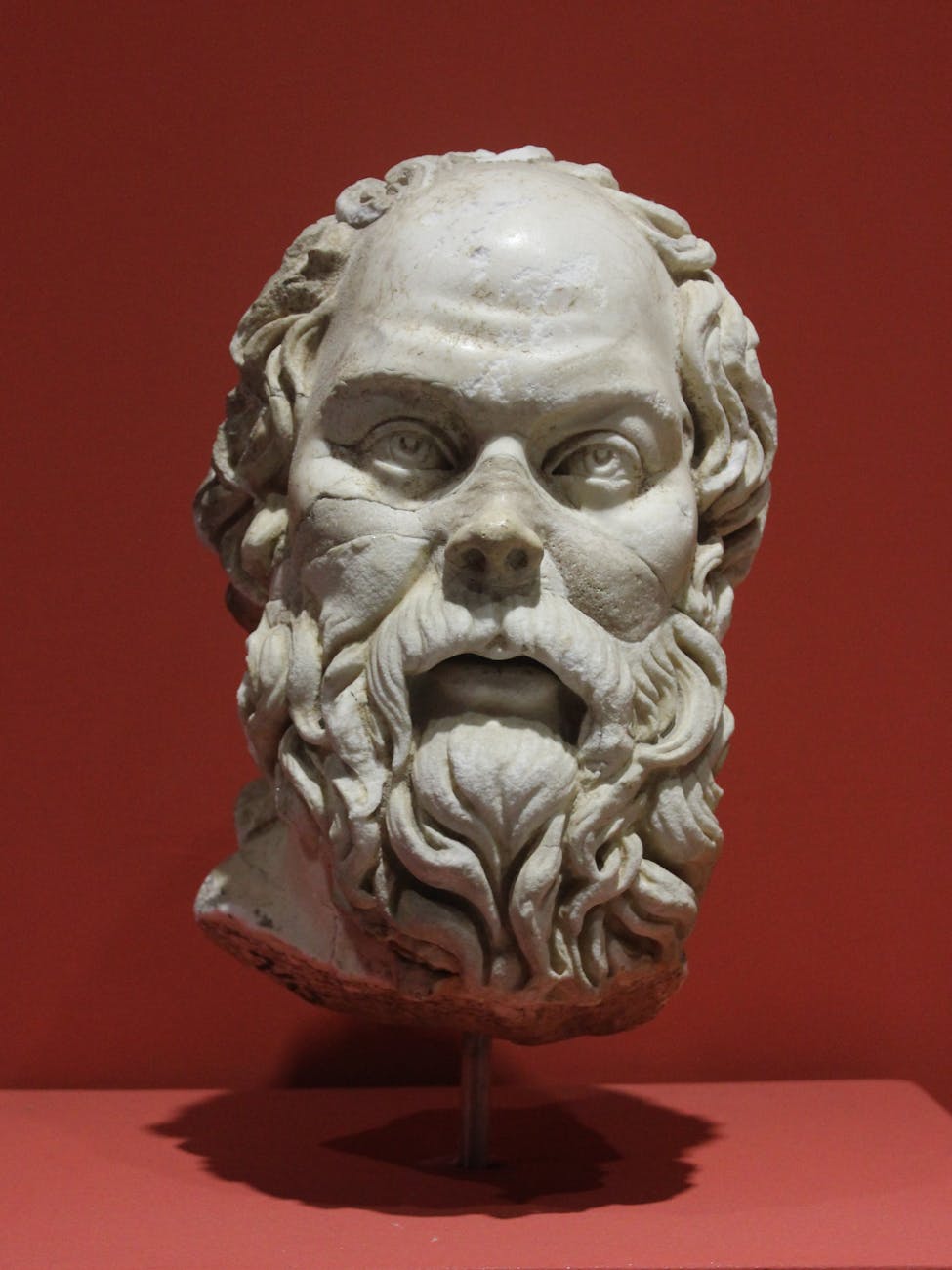
But nearly two thousand years ago, a Roman philosopher challenged that idea with a single sentence that still feels unsettlingly relevant today:
“It is not the man who has too little, but the man who craves more, who is poor.”
That line, written by Seneca, reframes wealth entirely. It suggests that the real problem isn’t how much we have, but how we relate to it.
In other words, the most misunderstood idea about wealth is that more money will eventually create peace of mind.
For many of us, that peace never arrives.
The Moving Goalpost of “Enough”
When was the last time you checked your bank balance and felt genuine, lasting peace?
Not relief that a bill cleared.
Not excitement about a raise.
But real contentment.
For many people—including myself for years—that feeling is rare.
Early in my career, I had a number in my head. I believed that once I saved a certain amount, I would finally feel secure. That number represented safety, stability, and freedom from financial anxiety.
Eventually, I reached it.
And something surprising happened.
Nothing.
The feeling I expected never came. Instead, the goalpost quietly moved. The number that once represented security suddenly felt insufficient. It was like chasing the horizon—no matter how far I traveled, it always stayed just out of reach.
To be fair, life changes as we grow older. Responsibilities increase. Families expand. Unexpected expenses appear. But the experience revealed something important: wealth accumulation has a remarkable ability to create moving goalposts.
Without realizing it, many of us spend years chasing a sense of security that constantly redefines itself.
The Illusion That More Money Creates Stability
Modern culture reinforces the belief that accumulation solves life’s uncertainty.
Earn more.
Save more.
Invest more.
Eventually, we imagine arriving at a place called “financial security,” where anxiety disappears, and peace finally settles in.
But the data tells a more complicated story.
Princeton economist Angus Deaton and psychologist Daniel Kahneman conducted a famous 2010 study that analyzed over 450,000 responses on income and life satisfaction. They found that emotional well-being increases with income up to about $75,000 annually—but after that? The curve flattens dramatically.
More recent studies suggest the number might be closer to $95,000-$105,000 in today’s dollars, but the principle remains the same: beyond meeting your basic needs and a reasonable buffer, additional wealth doesn’t translate into additional peace of mind.
In fact, researchers at Harvard Business School found something fascinating in their 2018 study on ‘time poverty.’ They discovered that wealthier individuals often report feeling more time-stressed than their lower-income counterparts, despite having more resources to outsource tasks.
The same Harvard study found that people who prioritized time over money were consistently happier, regardless of their income level. The wealthy people who understood this were happier than the wealthy people who didn’t, and the modest-income people who understood this were happier than the modest-income people who were still chasing the ‘more money equals more security’ myth.
The ancient philosopher Seneca, who was actually quite wealthy himself, understood this paradox perfectly. Nearly 2000 years ago, he wrote: ‘It is not the man who has too little, but the man who craves more, who is poor.’
The difference wasn’t wealth itself. It was the relationship to wealth.
The Psychology of “Never Enough”
Why do we keep moving the goalposts?
Psychologists call this phenomenon the hedonic treadmill. Human beings adapt remarkably quickly to improvements in their circumstances.
The promotion you worked so hard for feels thrilling at first. The new home brings excitement. The salary increase creates a rush of relief.
But eventually, these upgrades become normal. The excitement fades, and our baseline expectations quietly rise to match our new reality. Then the search begins again.
There’s another, deeper issue hiding beneath this pattern. When we treat money as our primary source of security, we unintentionally hand over our peace of mind to forces completely outside our control:
The economy
The stock market
Corporate decisions
Industry changes
Global events.
Suddenly, our sense of safety depends on systems we cannot influence.
Dr. Tim Kasser, a psychologist at Knox College, has spent decades studying the relationship between materialism and well-being.
His research, compiled in multiple studies across different cultures, consistently shows that people who prioritize material wealth as a primary life goal report higher levels of anxiety and depression, lower levels of life satisfaction, and more troubled relationships.
The troubling part is that the pursuit of money as a form of security often undermines the very things that actually provide security—relationships, purpose, and inner resilience.
I’ve seen this dynamic in my own life. The periods when I focused most intently on accumulating money were also when I felt most anxious and least present. I was so preoccupied with securing the future that I was missing the present.
Money itself wasn’t the problem. But when money becomes the master rather than the tool, it demands our full attention.
The Hidden Costs of the Wealth Misconception
The belief that more money automatically creates security carries costs far beyond our bank accounts.
It affects our relationships.
Research from the University of Georgia found that financial stress is one of the strongest predictors of relationship conflict. Interestingly, the issue wasn’t always financial hardship—it was financial anxiety and constant money-related tension.
It affects our health.
Surveys from the American Psychological Association repeatedly show that money and work are among the top sources of chronic stress. Long-term stress is linked to everything from heart disease to depression.
It affects our sense of purpose.
When wealth accumulation becomes the central goal of life, other values tend to move to the margins. Creativity, contribution, relationships, and meaning become secondary to financial progress.
But many of history’s great thinkers saw wealth very differently.
Epictetus, the Stoic philosopher who was born into slavery, wrote:
“Wealth consists not in having great possessions, but in having few wants.”
This idea is often misunderstood as romanticizing poverty. It isn’t. Instead, it suggests that freedom grows when our desires become more intentional.
Redefining Wealth
If wealth isn’t simply about accumulation, then what does it actually mean to be wealthy?
One way to think about it is this:
True wealth is sufficiency plus contentment, multiplied by autonomy.
Sufficiency
Sufficiency means having enough to meet your real needs.
Food, shelter, healthcare, meaningful experiences, and a reasonable margin of safety.
Research on living wages consistently shows that the level of income required to live comfortably is often far lower than people assume—especially once we strip away status-driven spending.
Contentment
Contentment is the ability to appreciate sufficiency.
This doesn’t mean abandoning ambition or growth. It means recognizing abundance rather than constantly scanning for what’s missing.
Studies on gratitude show that people who regularly practice appreciation report higher happiness and greater optimism about the future.
Autonomy
Perhaps the most powerful dimension of wealth is autonomy—the ability to make decisions based on values rather than financial pressure.
The rich have money.
The wealthy have a choice.
One of the best years of my life was actually the year I earned the least. I had taken a sabbatical. My focus wasn’t maximizing income but traveling, reconnecting with friends and family, improving my health, and resting in a way I hadn’t allowed myself to in years.
Of course, that year was possible because I had planned and saved. Financial stability still mattered.
But the experience clarified something important:
Money matters because of the life it enables, not the status it creates.
A Different Path Forward
If our culture constantly pushes us toward accumulation, redefining wealth requires conscious effort.
A few small shifts can dramatically change our relationship with money.
1. Define Your Personal “Enough”
Instead of adopting society’s definition of success, ask a more personal question:
What do I actually need to live well?
A simple exercise is a “necessity audit.” Review your recent spending and categorize each expense as:
- Essential
- Valuable
- Optional
Many people discover that a surprising amount falls into the third category.
2. Shift from Accumulation to Appreciation
Gratitude isn’t just a feel-good exercise—it changes how we perceive our resources.
Instead of constantly measuring what’s missing, appreciation helps us recognize what is already working.
3. Invest in Durable Forms of Wealth
Some forms of wealth appreciate regardless of economic conditions:
- Skills that remain useful over time
- Strong relationships
- Physical and mental health
- Personal integrity
- Wisdom and knowledge
These assets rarely appear on financial statements, but they shape the quality of life more profoundly than most investments.
4. Practice Intentional Simplicity
Intentional simplicity isn’t about deprivation. It’s about alignment.
Instead of expanding your lifestyle every time your income increases, pause and ask whether the upgrade truly adds value to your life.
5. Treat Money as a Tool
Money is stored time and effort.
Its purpose is to serve your values—not to become the value itself.
Financial educator Ramit Sethi describes this idea as designing a “rich life”—spending generously on the things that matter most while cutting ruthlessly on everything else.
The Quiet Revolution of Contentment
We live in a culture that profits from dissatisfaction.
Entire industries depend on convincing us that what we have is not enough.
Seen in that light, contentment becomes more than a personal mindset. It becomes a quiet act of resistance.
True wealth is not found in endless accumulation.
It appears that when our needs are met, our desires are intentional, and our lives are aligned with what truly matters.
Or, as the bible reminds us in 1 Timothy 6:6-10;
“Godliness with contentment is great gain.”
In a world that constantly encourages us to chase more, learning to recognize enough may be the most powerful form of wealth we can achieve.
And perhaps the most liberating realization of all is this:
The moment we stop chasing money as the sole means of security, we often begin to experience true wealth.
 The Prudent Drift